

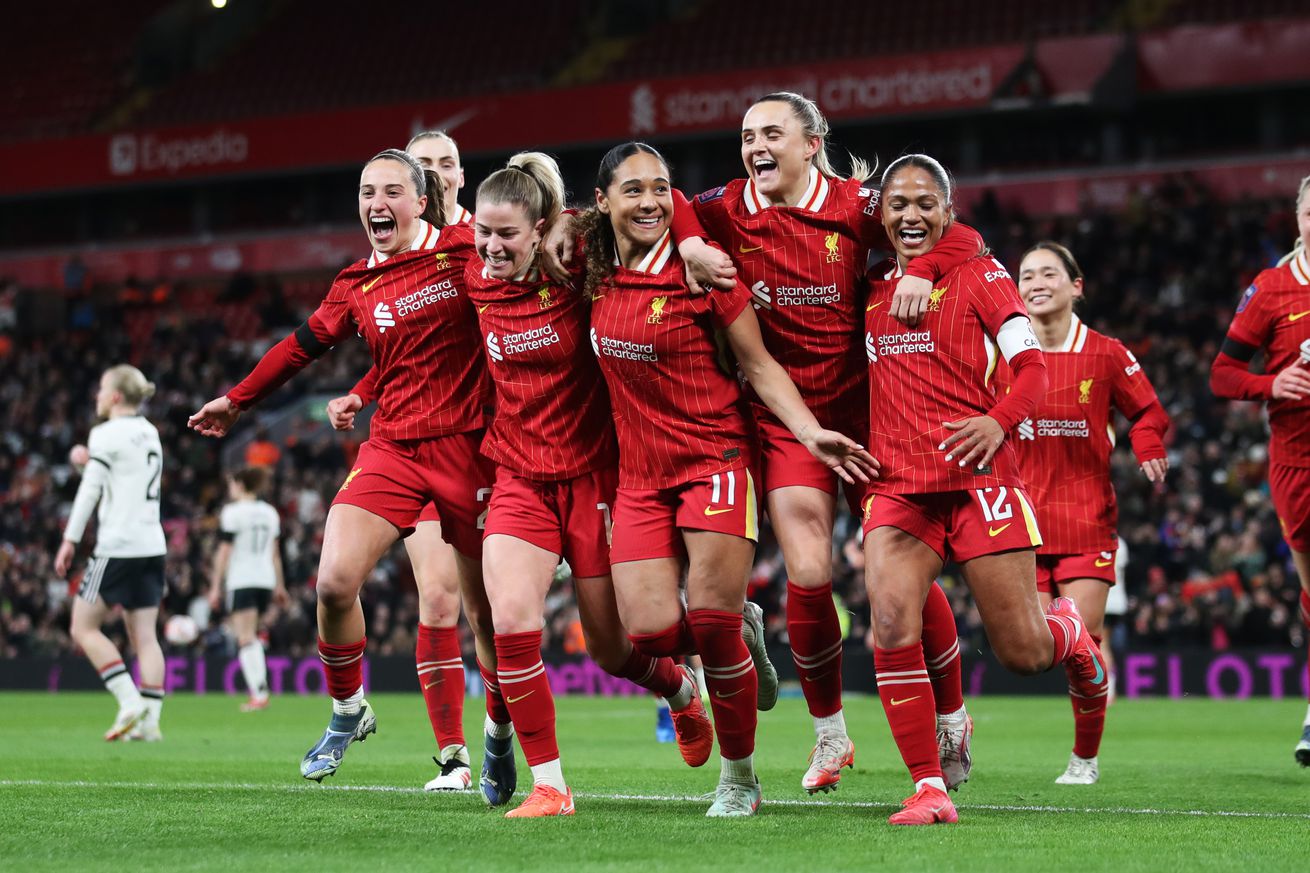
There were a few bright spots in a season marred by injuries and inconsistency for the Reds as the stumbled to finish seventh in the WSL.
The Liverpool FC Women entered the 2024/25 WSL season with high expectations after finishing fourth the season before. The Reds had a fairly settled squad with a manager in Matt Beard who had continually built momentum season after season since joining the club while they were in the FA Women’s Championship. Beard saw the club win promotion back to the WSL before finishing seventh and fourth in the next two seasons in the top flight.
Unfortunately for Liverpool, things seemed to go awry from the start. A slim squad struggled with injuries during preseason, with the trend continuing throughout the season. Inconsistent performances saw Liverpool throw away leads on a regular basis to drop points against teams they feel they should have finished off. The struggles saw Matt Beard sacked, and the Reds finish a paltry seventh. Despite the issues, there were several bright spots along the way. Below we will take a look at some of the things that went wrong as well as some that went right.
What Went Wrong
Squad Depth
Liverpool saw a few key players leave after the team finished fourth. While the forward line saw key additions, no players were brought in to cover the departures of right back Emma Koivisto and midfielder Missy Bo Kearns. Lucy Parry was the only right back on the squad to begin the season with the departure of Koivisto, and the Reds only had four senior team midfielders with Kearns moving on in search of a regular starting gig. In addition, no goalkeeper was brought in while Faye Kirby was working her way back from an ACL injury, leaving just Rachael Laws and Teagan Micah in the first team squad.
Injuries Galore
A thin squad meant any injury would be amplified, and the Reds dealt with a bevvy of players who missed significant amounts of time. Lucy Parry dealt with an achilles issue for most of the season, with center backs Grace Fisk and Jenna Clark playin out of their better position to fill in. The midfield saw all of the core starters miss multiple matches through injury, with the main rotational player Sofie Lundgaard going down with another significant knee injury that saw her miss over half the season. Teenager Zara Shaw was called on to fill in at times before she herself suffered her second ACL injury. Young centerback Hannah Silcock was out for a large portion of the season after beginning to earn regular minutes, while center striker Sophie Roman Haug dealt with a calf injury that kept her out for a several months.
Finding Consistency
With a thin squad and so many injuries to key players, it should come as no surprise that Liverpool struggled with consistency. Players were frequently called on to play in positions they were not best suited to, which caused tactical issues. Matt Beard rotated through combination after combination, whether by choice or due to injury, and failed to find a consistent set of players and tactics that synced up to earn consistent results. Beard seemed wedded to a 3-5-2 formation that failed to get the best out of the dynamic Olivia Smith. The young attacker was frequently receiving the ball in the center of the pitch with her back to goal with multiple defenders clogging the area, or the team was lumping the ball into the box for her as the point striker when Sophie Roman Haug was out injured.
Putting Teams Away
While Liverpool struggled for form overall, one thing they did well was score the early goal. Unfortunately, the Reds had a torrid time of holding onto leads. Liverpool dropped points after going ahead first six times. That accounts for 27% of the league matches. In most of those matches, Liverpool many more shots and had a significantly higher expected goals tally. Unfortunately for the Reds, they were plagued all season with poor finishing, not-so-great decision making, and some really inopportune defensive mistakes.
One thing that stands out as far as statistic go is that Liverpool had the lowest total of goals per shot (0.07). They also took shots further away from goal than any other team, with an average distance per shot of 17.9 yards. On the other end of the pitch, Liverpool lead the league by conceding five own goals.
Sacking The Manager
Injuries, inconsistencies, and blowing leads in winnable matches all had a hand in Matt Beard being given his walking papers in March. While many felt a change in manager for Liverpool was likely, the timing of it was surprising to all. Beard may have forced the hand of the Reds leadership by being quite vocal about the lack of spending.
What Went Right
Olivia Smith
The young Canadian was the marquee signing for Liverpool, and she showed her talent in spades. Despite a frustrating start, Smith surged forward in the second half of the season to lead the team with seven goals in the WSL, more than double the total of anyone else on the team. Her electric pace and dynamic dribbling had other teams key in on her, with Smith earning almost 2.5 fouls per game. That was good for second in the WSL, and she should have earned quite a few more fouls.
Moving to a 4-3-3
When Amber Whiteley was named the interim manager, she shifted the Reds to a 4-3-3 formation. While it didn’t solve all of Liverpool’s problems, it allowed Olivia Smith to receive the ball in a wide position, often isolated in the 1v1 situations she thrives in. Cornelia Kapocs proved to be a solid counterpart on the left wing while Leanne Kiernan also was given a chance to shine in the formation as the central striker. Kiernan’s tireless running and pressing a key factor in a three match winning streak to start Whiteley’s tenure. Liverpool eventually came back to earth, but sticking with the formation saw better overall performances across the board even if the results didn’t always go their way.
A First Anfield Win
The Liverpool FC Women have been playing a match or three at Anfield for the past few seasons. Unfortunately, the results have not gone Liverpool’s way when they have played on the big stage. This season however, the Reds finally broke their duck in a stunning 3-1 win over Manchester United in front of a crowd of over 15,000.
A Deep Cup Run
While the WSL season did not go to plan, Liverpool did make a great run in the FA Women’s Cup. The Reds made it to the semifinals, losing a heartbreaker 2-1 to the eventual champions Chelsea. Along the way, Liverpool clobbered West Ham 5-0, and knocked off Arsenal 1-0 in the quarterfinals.